Biophilic Design at Home: Beyond Just Adding Plants
Biophilic Design at Home: Beyond Just Adding Plants
Key Takeaways:
- Biophilic design is a science-backed approach to interiors that goes far beyond houseplants — it's about reconnecting your home to natural patterns, materials, and light
- Five core principles guide biophilic interiors: natural light, organic materials, nature views, water elements, and curved/organic shapes
- Studies show biophilic spaces reduce stress hormones by up to 15% and improve focus by 8-15% — it's wellness design with real evidence
- You don't need a renovation budget: rearranging furniture toward windows, swapping synthetic textiles for natural ones, and choosing an earth-toned palette are powerful first steps
- AI room design tools let you visualize biophilic transformations in your actual space — see what natural materials and green palettes look like before buying anything
What Is Biophilic Design, Really?
The word gets thrown around a lot in 2026 design circles, often reduced to "put some plants on a shelf." But biophilic design is something much more interesting — and much more useful — than decorating with ferns. Coined by biologist Edward O. Wilson in the 1980s, biophilia describes the innate human tendency to seek connections with nature. Biophilic design takes that biological reality and builds interiors around it.
Think about the last time you felt genuinely calm indoors. Chances are, natural elements were involved — sunlight streaming through a window, the texture of a wooden table under your hands, the sound of rain outside, or the sight of greenery beyond the glass. These aren't coincidences. Our brains evolved over millions of years in natural environments, and they still respond to natural stimuli with measurable reductions in stress hormones, improved focus, and better sleep patterns.
The practical question, then, isn't whether biophilic design works — the science is settled on that. It's how to bring these principles into a normal home without turning your living room into a greenhouse or spending a fortune on reclaimed wood. The answer lies in understanding the five core principles and applying them thoughtfully, room by room.
What Are the Five Principles of Biophilic Design?
Professional biophilic designers work with a framework that's surprisingly approachable once you strip away the jargon. These five principles can guide every decision from paint colour to furniture placement, and none of them require architectural changes.
Natural Light: The Foundation Everything Else Builds On
No amount of beautiful materials or perfect greenery compensates for a room that feels artificially lit. Natural light is the single most important element of biophilic design, and optimizing it is often free. Start with an honest assessment: are your curtains blocking more light than necessary? Is furniture positioned to benefit from window light, or does it face away? Are there surfaces near windows that could reflect light deeper into the room?
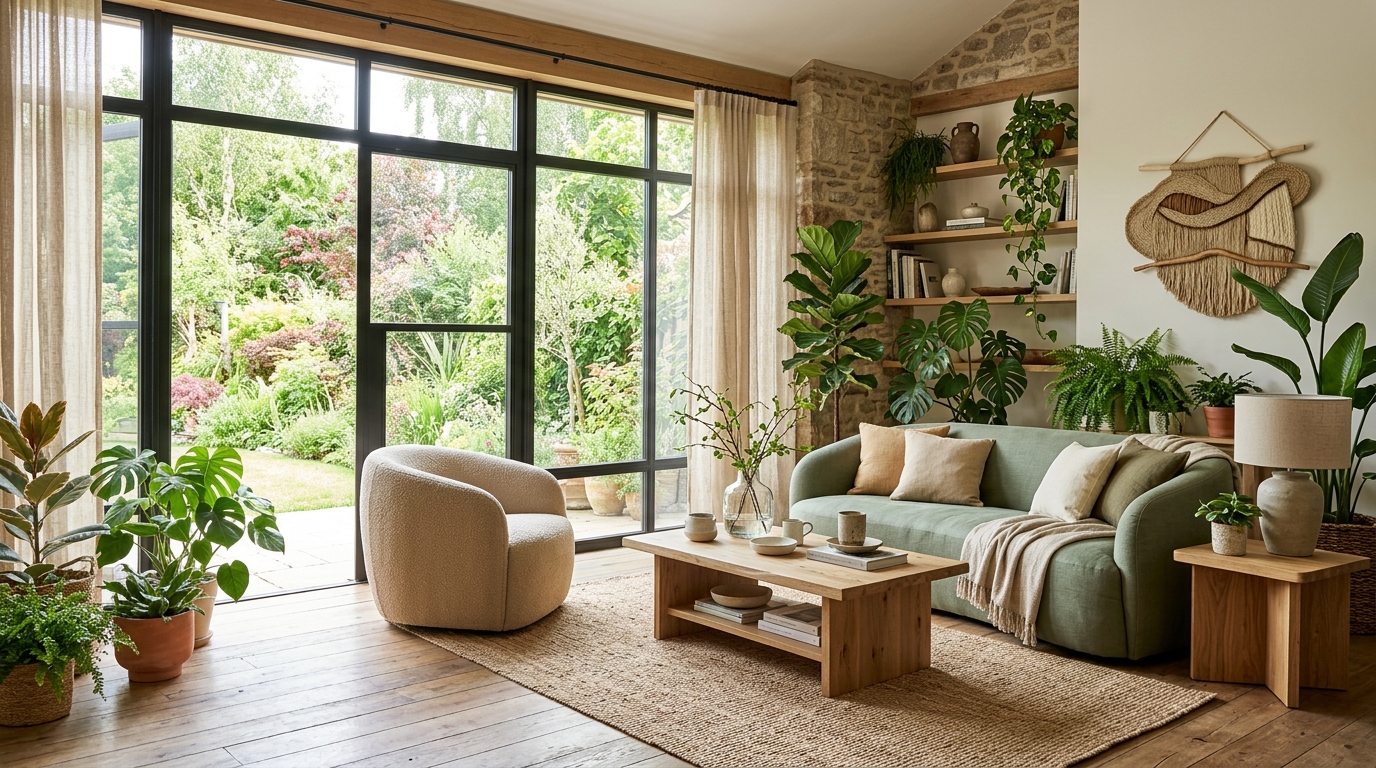
Sheer curtains instead of blackout blinds (except in bedrooms), lighter window treatments, and strategically placed mirrors can transform how much daylight reaches your living spaces. In rooms with limited natural light, full-spectrum bulbs that mimic daylight — used during daytime hours, then switched to warm tones in the evening — bridge the gap. A Scandinavian living room with forest green accents shows how natural light amplifies the warmth of organic colours, making the whole room feel alive.
Natural Materials: Texture You Can Feel
Our sense of touch is more connected to our emotional state than we typically realize. Running your hand across a smooth wooden surface triggers a different neurological response than touching plastic laminate — even if they look identical from a distance. Biophilic interiors prioritize materials that carry the irregularity and warmth of nature: real wood, stone, linen, wool, rattan, ceramic, and cork.
This doesn't mean replacing everything overnight. It means making nature-positive choices when you do buy: a wooden cutting board instead of plastic, linen cushion covers instead of polyester, a jute rug instead of synthetic, terracotta pots instead of glazed ceramic. Over time, these swaps compound into a room that feels fundamentally different — warmer, more grounded, more human. The Scandinavian bedroom in tan, beige, and ivory with plush linens demonstrates how natural textiles create an envelope of comfort that synthetic materials simply can't replicate.
Views and Greenery: Bringing the Outside In
This is the principle most people already associate with biophilic design, but it goes beyond potting a monstera in the corner. The goal is creating visual connections to living systems — whether that's a window view of trees, a collection of thriving plants at different heights, or even high-quality nature photography and botanical illustrations on the walls.
For actual plants, the key word is "thriving." Three healthy, well-placed plants contribute more to biophilic design than fifteen struggling ones in mismatched pots. Choose species that genuinely suit your light conditions and lifestyle. Group them at different heights — a tall floor plant, a medium shelf plant, a small tabletop succulent — to mimic the layering you'd see in nature. And don't forget the view: if you're lucky enough to have one, arrange your primary seating to face it. A tropical living room design in forest green and dusty rose shows how botanical elements can anchor an entire room's identity without overwhelming it.
Water Elements: Sound and Movement
Water is deeply calming to the human nervous system — we seek it instinctively, which is why waterfront properties command premium prices and the sound of a stream can put you to sleep. In a home context, you don't need a built-in fountain (though small tabletop ones are surprisingly affordable and effective). Even the sound of water matters: a small fountain in an entryway, a fish tank in a living room, or simply leaving a window open to catch the sound of rain creates that connection.
If physical water features aren't practical, materials that evoke water — glass, polished stone, reflective surfaces with ripple-like textures — activate similar associations. A bathroom designed around natural stone and glass, with visible water elements, is biophilic design at its most intuitive.
Organic Shapes and Patterns: Breaking the Grid
Nature doesn't do straight lines. Trees branch, rivers curve, leaves spiral, clouds billow. Our environments, by contrast, are overwhelmingly rectangular — boxes within boxes. Introducing organic shapes disrupts that grid in ways that feel subtly restorative. An arched doorway, a round coffee table, a wavy-edged mirror, a pendant light with an organic form — these elements echo natural patterns and give the eye something more interesting to follow.
Patterns from nature work the same way. Botanical prints, wood grain, marble veining, and fractal patterns (which repeat at different scales, like fern fronds or tree branches) all register as "natural" to our visual processing system. Incorporating them through textiles, wallpaper, or art adds biophilic richness without any structural changes.
The Five Biophilic Principles at a Glance
| Principle | What It Involves | Budget-Friendly Starting Point | Impact on Wellbeing | Best Rooms |
|---|---|---|---|---|
| Natural Light | Maximizing daylight, sheer curtains, mirrors | Swap heavy curtains for sheers (free–£30) | Improved circadian rhythm, better sleep | All rooms, especially living room & bedroom |
| Natural Materials | Wood, stone, linen, wool, rattan, cork | Replace plastic items with wooden alternatives (£5–£25) | Reduced stress through tactile connection | Kitchen, living room, bedroom |
| Views & Greenery | Plants, window views, botanical art | 2–3 low-maintenance plants like pothos or snake plant (£10–£30) | 15% cortisol reduction, improved focus | Living room, home office, bedroom |
| Water Elements | Fountains, fish tanks, water-evoking materials | Tabletop fountain or glass/polished stone accents (£15–£40) | Calming effect on nervous system | Entryway, bathroom, living room |
| Organic Shapes | Curves, arches, natural patterns, fractals | Round mirror or organic-shaped cushions (£10–£35) | Visual restoration, reduced mental fatigue | All rooms — breaks the rectangular grid |
How Do You Apply Biophilic Design Room by Room?
Theory is useful, but what does this look like in practice? Here's how the five principles play out in the rooms where they matter most.
Living Room: Your Indoor Ecosystem
The living room is where biophilic design has the most impact because it's where you spend the most waking hours. Start with furniture arrangement: position your main seating to face the largest window or the best view. This sounds basic, but most living rooms are arranged around the TV, which puts screens — not nature — at the center of the space.
Build in layers of natural materials. A wooden coffee table, a linen sofa, a wool throw, a jute rug, ceramic vases with dried or fresh botanicals. Group plants near the window where they'll thrive (and where the light makes them glow). Choose a colour palette drawn from nature: sage green walls with warm sand furniture, or white walls with abundant natural wood and green accents. The French Country living room with natural green and plush textures captures this feeling perfectly — it's sophisticated without being cold, natural without being rustic.
Bedroom: Your Recovery Space
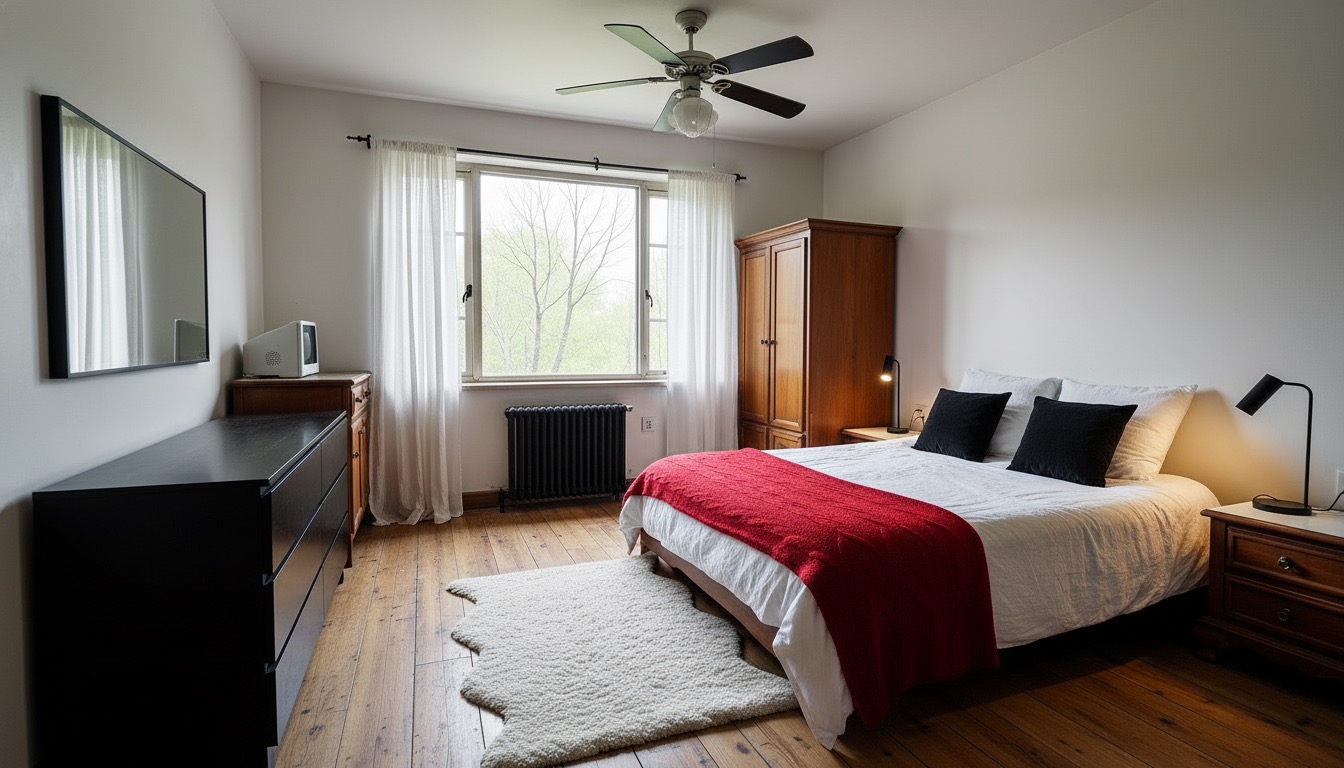
Sleep quality is where biophilic design's health benefits become most personal. A bedroom designed with biophilic principles isn't just prettier — it actively supports better rest. Natural-fibre bedding (linen, cotton, or bamboo) regulates temperature better than synthetics. A bedroom in forest green and dusty rose shows how earthy tones create a cocooning effect that's both calming and visually warm.
Minimize artificial materials close to where you sleep. A wooden bed frame and nightstands, a wool or cotton rug underfoot, and curtains in a natural fabric create a sensory environment that's fundamentally different from melamine and polyester. If you can see greenery from your bed — whether through a window or from a well-placed plant — even better. Research shows that visual access to nature from the bed correlates with faster sleep onset and fewer nighttime wakings.
Kitchen: Where Natural Materials Earn Their Keep
Kitchens are inherently tactile spaces — you're touching surfaces constantly while cooking, cleaning, and eating. This makes them ideal for natural material choices that you'll feel every day. A wooden chopping board, stone countertops, ceramic tiles, and open shelving displaying pottery and woven baskets all contribute to a biophilic kitchen without requiring a full renovation.
Herbs on the windowsill are the most practical biophilic element possible — living plants you can also eat. The rustic kitchen in sage green with light grey and natural tones shows how a kitchen can feel warm and organic while remaining completely functional. The colour palette does heavy lifting here: sage green cabinets with natural wood countertops feel connected to the earth in a way that white-on-white never quite achieves.
Bathroom: The Natural Spa
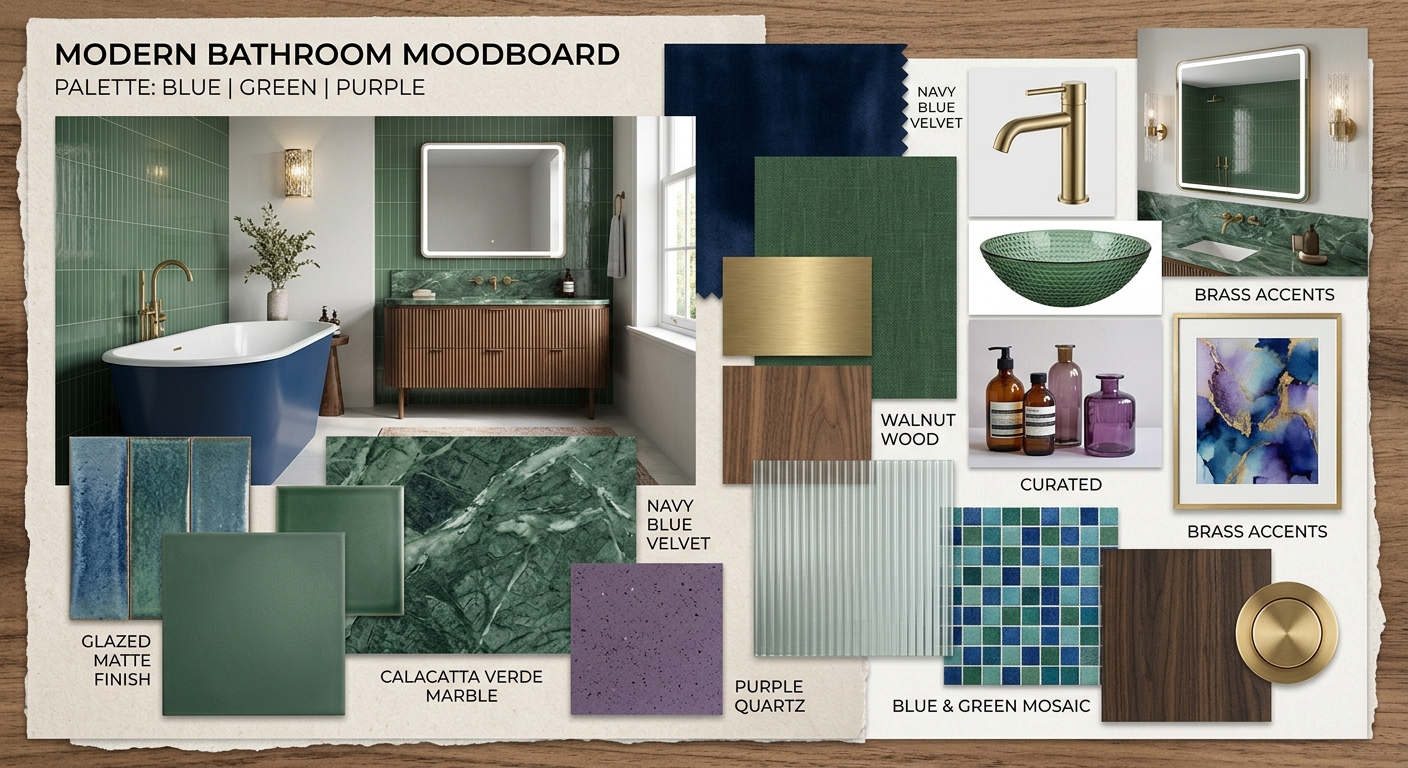
Bathrooms are where water and natural materials converge most naturally. Stone tiles, wooden vanities (treated for moisture resistance), live plants that love humidity (ferns, air plants, peace lilies), and natural soap and towels in earthy tones transform a utilitarian space into something that feels restorative. A powder blue and soft pink palette with natural textures shows how water-inspired colours create a spa-like atmosphere that's calming every morning and evening.
What Colour Palettes Work for Biophilic Interiors?
Colour is one of the most accessible ways to bring biophilic principles into your home, and the palettes that work best are — unsurprisingly — drawn from the natural world. The trick is moving beyond the obvious greens and browns to include the full spectrum of nature's palette.
Sage green with warm sand is the quintessential biophilic combination. It references forest meets desert, the place where greenery gives way to warm earth. This palette works in virtually every room and pairs beautifully with natural wood and linen. For something bolder, forest green with terracotta creates the feeling of a Mediterranean garden — rich, warm, and grounded. And for a lighter touch, warm white with honey wood tones and touches of moss green keeps things airy while maintaining that natural connection.
What to avoid: cool greys and stark whites without natural warmth. They read as clinical rather than natural, regardless of how many plants you add. Biophilic colour should feel like it could exist in the natural world — and the natural world is warmer than most modern colour palettes suggest.
How Can AI Help You Visualize Biophilic Changes?
One of the challenges with biophilic design is that it's hard to imagine holistically. You can picture a sage green wall or a wooden table, but seeing how all the elements work together in your specific room — your proportions, your light, your existing furniture — requires either a professional designer's eye or a tool that can show you.
AI room design fills that gap. Upload a photo of your current room and experiment with biophilic transformations: natural colour palettes, material changes, different styles that emphasize organic warmth. You might discover that your living room looks extraordinary in a Scandinavian palette with bold green and rose accents, or that your bedroom is perfectly suited to a warm tan and ivory approach with natural linens.
The beauty of trying it digitally first is that you can compare approaches side by side. Tropical versus Scandinavian, bold green versus subtle sand, heavy texture versus light minimalism — see what resonates with your space and your instincts before spending a penny.
What Are Common Biophilic Design Mistakes to Avoid?
The plant graveyard is the most visible one. Buying a dozen plants because biophilic design "means plants" and then watching them die because your room gets four hours of indirect light isn't biophilic — it's demoralizing. Start with two or three species known to thrive in your conditions, learn what they need, and add from there. Better yet, focus on the other four principles first and let plants be the finishing touch.
Second: ignoring light quality. Filling a room with natural materials but leaving harsh fluorescent overhead lighting defeats the purpose. Natural materials look their best — and trigger the right psychological response — under warm, layered lighting that mimics the variety of natural light. Invest in dimmers and warm-toned bulbs before investing in reclaimed wood.
Third: forcing a literal interpretation. Biophilic design doesn't mean making your living room look like a forest. It means incorporating natural references thoughtfully. A room with tree-trunk wallpaper, leaf-print cushions, a moss wall, AND six potted plants feels like a theme park, not a home. Choose your moments. A single, beautiful piece of live-edge wood on a shelf can carry more biophilic weight than a room full of nature-themed decorations.
Frequently Asked Questions
What is biophilic design in simple terms?
Biophilic design is a way of designing indoor spaces that strengthens our connection to the natural world. It goes beyond adding plants — it includes using natural materials like wood and stone, maximizing natural light, incorporating organic shapes and patterns, and creating views of nature. The idea is that humans evolved in natural environments and feel calmer, happier, and more productive when our surroundings reflect that.
Is biophilic design expensive to implement?
It doesn't have to be. Some of the most effective biophilic changes are free — rearranging furniture to face a window, opening curtains wider, or decluttering surfaces to let natural materials show. Swapping synthetic materials for natural ones (linen curtains instead of polyester, a wooden tray instead of plastic) can be done gradually and affordably. The most expensive elements — living walls, skylights, water features — are lovely but not essential.
Can I do biophilic design in an apartment without outdoor views?
Absolutely. While views of nature are one pillar of biophilic design, they're not the only one. Focus on natural materials (wood furniture, stone accessories, woven textiles), organic patterns (leaf prints, wave-like curves in furniture), and nature-inspired colour palettes (sage green, warm sand, terracotta). Even photographs or artwork depicting natural scenes activate the same calming response.
What are the best plants for biophilic interior design?
Choose plants that thrive in your light conditions rather than chasing Instagram aesthetics. For low light: snake plants, pothos, ZZ plants. For bright indirect light: monstera, fiddle leaf fig, rubber plant. For bathrooms: ferns, air plants, peace lilies. The goal is living, thriving greenery — a few healthy plants beat a dozen struggling ones for both aesthetics and air quality.
Does biophilic design actually improve wellbeing?
Research consistently says yes. Studies have found that biophilic design elements reduce cortisol levels (the stress hormone) by up to 15%, improve concentration and productivity by 8-15%, and speed recovery in healthcare settings. Even small changes — a view of greenery, natural light, wooden surfaces — measurably improve mood and reduce anxiety.
Want to see what biophilic design looks like in your actual room? Upload a photo and let AI show you the transformation — it might be the most natural change you've ever made.